
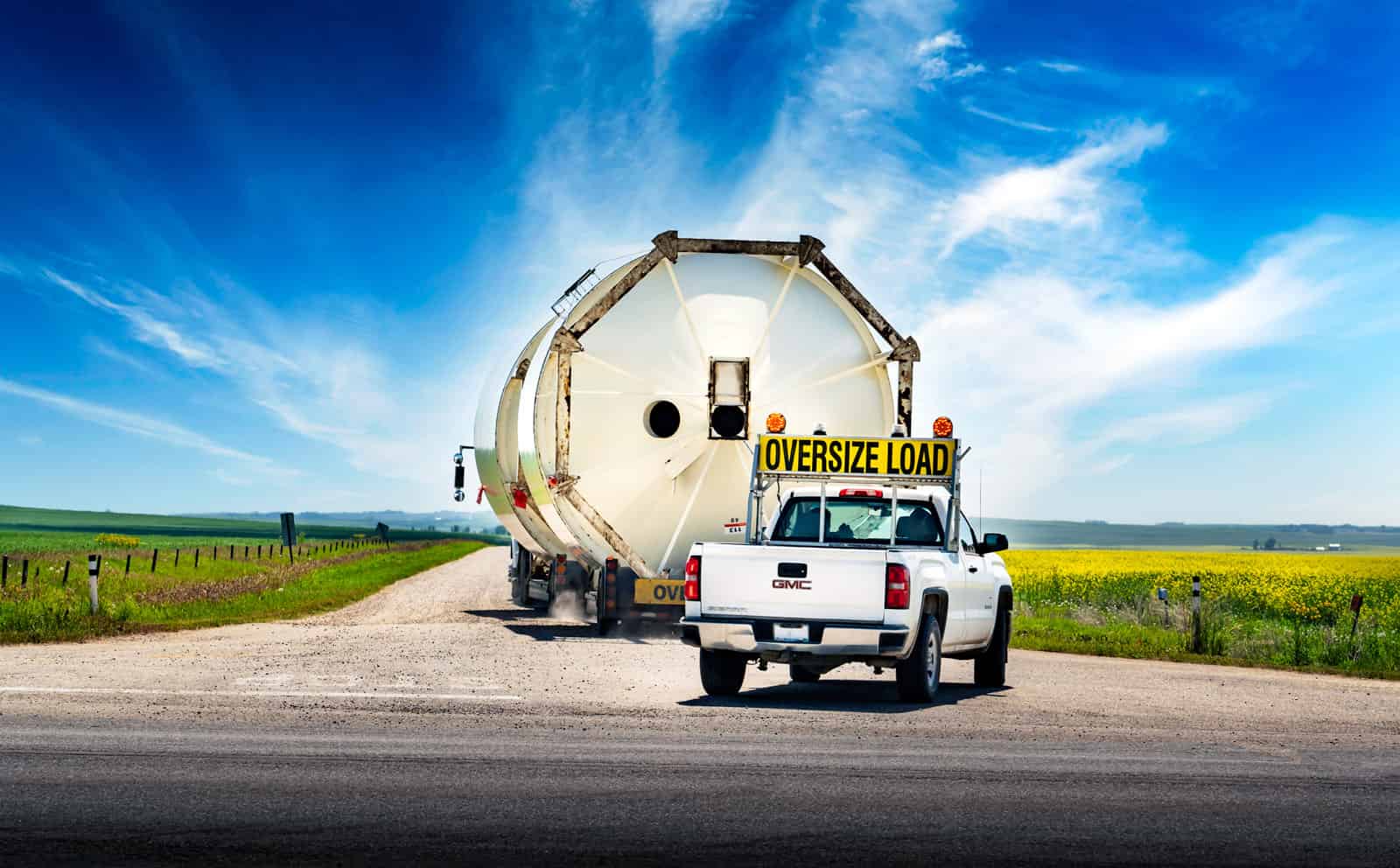
Pilot car insurance is a commercial policy that protects escort vehicle drivers who guide oversized loads, aircraft, or traffic through work zones. Because this is business use, a personal auto policy won’t cover it — and many states require specific coverage limits, and sometimes certification, before you can legally operate.
A pilot car (also called an escort vehicle) guides and supports trucks hauling oversized loads, aircraft on runways, or motorists through construction areas. Like any vehicle on the road, it has to be properly insured — but the requirements, and the penalties for skipping them, vary widely from state to state. Below we cover what pilot car insurance includes, the state-by-state requirements, and what it costs.
Get Your Free Quote Started

Why Personal Auto Insurance Isn’t Enough
Escort drivers often use their own personal vehicles for work — but even then, they need a commercial policy. Personal auto insurance excludes accidents that happen while the vehicle is being used for business, which means a claim during escort work could be denied outright.
Driving without the right coverage carries real penalties, and they vary by state:
- Driver’s license suspension
- Vehicle confiscation
- Fines
- Jail time
Requirements for insurance will vary from state to state. For example, Colorado requires pilot car drivers to be specially certified and obtain insurance that specifically covers Pilot Escort Operations. Drivers must also have a minimum coverage of $1 million for combined single limit or commercial liability coverage.
The state has other stringent requirements for being able to operate as a pilot driver legally. Other states may have other similar or unique requirements for insurance and certifications.
A comprehensive insurance policy will provide the most protection against risk for pilot car drivers.
Pilot Car Insurance Requirements by State
Pilot car requirements aren’t set at the federal level — they’re set state by state, which is what makes escort work confusing. Three things tend to vary:
- Certification. Some states require escort drivers to complete a training/certification program before operating. Others have no certification requirement at all.
- Minimum liability limits. Many states and load carriers expect a $1,000,000 combined single limit (CSL), but the exact figure differs.
- Escort-specific endorsement. A handful of states require your policy to explicitly state that it covers pilot/escort operations — a standard commercial auto policy won’t satisfy them.
Before you take a job in any state, confirm the current rules with that state’s DOT or permit office and make sure your policy meets them in writing.
Before you take a job in any state, confirm the current rules with that state’s DOT or permit office and make sure your policy meets them in writing.
|
State |
Certification required? |
Typical min. liability |
Escort-specific endorsement? |
Notes |
|---|---|---|---|---|
|
Alabama |
No |
$1M CSL (contractual norm) |
Not required by statute (recommended) |
No escort training-certification program. |
|
Alaska |
No |
$1M CSL (contractual norm) |
Not required by statute (recommended) |
No certification program. |
|
Arizona |
Yes |
$1M CSL (contractual norm) |
Recommended |
Cert via Arizona Trucking Assoc. (valid 4 yrs); recognizes equivalent out-of-state certs but still requires AZ authorization. |
|
Arkansas |
No |
$1M CSL (contractual norm) |
Not required by statute (recommended) |
No certification program. |
|
California |
No |
$1M CSL (contractual norm) |
Not required by statute (recommended) |
High-volume state, no escort certification program. |
|
Yes |
$1,000,000 CSL — statutory |
Yes — policy must state it covers Pilot/Escort Operations |
Among the strictest. Codified in 2 CCR 601-4 / CDOT rules. Recognizes AZ, FL, MN, OK, UT, WA + SC&RA certs. |
|
|
No |
$1M CSL (contractual norm) |
Not required by statute (recommended) |
No certification program. |
|
|
No |
$1M CSL (contractual norm) |
Not required by statute (recommended) |
No certification program. |
|
|
Florida |
Yes |
$1M CSL (contractual norm) |
Recommended |
Certification state; part of the reciprocity compact. FDOT authorization/qualification required. |
|
Yes |
$1M CSL (contractual norm) |
Recommended |
Certification codified (GA Comp. R. & Regs. 672-2-.06). Also requires a windshield escort permit sticker. |
|
|
Hawaii |
No |
$1M CSL (contractual norm) |
Not required by statute (recommended) |
No certification program. |
|
Idaho |
No |
$1M CSL (contractual norm) |
Not required by statute (recommended) |
No certification program. |
|
No |
$1M CSL (contractual norm) |
Not required by statute (recommended) |
No certification program. |
|
|
Indiana |
No |
$1M CSL (contractual norm) |
Not required by statute (recommended) |
No certification program. |
|
Iowa |
No |
$1M CSL (contractual norm) |
Not required by statute (recommended) |
No certification program. |
|
Kansas |
Registration |
$1M CSL (contractual norm) |
Not required by statute (recommended) |
Not a training course, but since 2020 KS requires pilot car companies to register vehicles and drivers annually. |
|
Kentucky |
No |
$1M CSL (contractual norm) |
Not required by statute (recommended) |
No certification program. |
|
Louisiana |
Escort permit + inspection |
$100,000 liability / $50,000 property damage for the LA escort permit; $1M CSL is still the contractual norm for work |
Proof of insurance verified for the escort permit |
Requires a “Louisiana Approved Escort Vehicle Permit” via DOTD Weights & Standards inspection — not a training course. |
|
Maine |
No |
$1M CSL (contractual norm) |
Not required by statute (recommended) |
No certification program. |
|
No |
$1M CSL (contractual norm) |
Not required by statute (recommended) |
No certification program. MDOT SHA hauling permit (Maryland OneStop). |
|
|
Massachusetts |
No |
$1M CSL (contractual norm) |
Not required by statute (recommended) |
No certification program. |
|
Michigan |
No |
$1M CSL (contractual norm) |
Not required by statute (recommended) |
No certification program. Add official MDOT link. |
|
Yes |
$1,000,000 CSL — statutory |
Yes — certificate must state it’s for pilot/escort operations |
Codified in Minn. R. 7455.1100. State Patrol (DPS) certification required; part of the reciprocity compact. |
|
|
Mississippi |
No |
$1M CSL (contractual norm) |
Not required by statute (recommended) |
No certification program. |
|
Missouri |
No |
$1M CSL (contractual norm) |
Not required by statute (recommended) |
No certification program. |
|
Montana |
No |
$1M CSL (contractual norm) |
Not required by statute (recommended) |
No certification program. |
|
Nebraska |
No |
$1M CSL (contractual norm) |
Not required by statute (recommended) |
No certification program. |
|
Yes |
$1M CSL (contractual norm) |
Recommended (verify) |
Certification plus an amber-light permit from the Nevada Highway Patrol. |
|
|
New Hampshire |
No |
$1M CSL (contractual norm) |
Not required by statute (recommended) |
No certification program. |
|
New Jersey |
No |
$1M CSL (contractual norm) |
Not required by statute (recommended) |
No certification program. |
|
New Mexico |
No (port-of-entry inspection) |
$1M CSL (contractual norm) |
Not required by statute (recommended) |
No training course; escort vehicles are inspected at the port of entry and the driver must present a certificate of insurance meeting NM minimums. |
|
Yes |
$1M CSL (contractual norm) |
Recommended |
Requires passing a short state exam (mobile-home focus). NY DMV info page; permits via NYSDOT (and NYC/Thruway have separate rules). |
|
|
Yes |
$1M CSL (contractual norm) |
Recommended |
Certification via 8-hr course (NCDOT). Part of the reciprocity compact. |
|
|
North Dakota |
No |
$1M CSL (contractual norm) |
Not required by statute (recommended) |
No certification program. |
|
Ohio |
No |
$1M CSL (contractual norm) |
Not required by statute (recommended) |
Major oversize corridor; no certification program. Add official ODOT link. |
|
Yes |
$1M CSL (contractual norm) |
Recommended |
Certification via course (OSU/DPS); part of the reciprocity compact. Permits issued through ODOT/DPS. |
|
|
Oregon |
No |
$1M CSL (contractual norm) |
Not required by statute (recommended) |
No certification program. |
|
Pennsylvania |
No |
$1M CSL (contractual norm) |
Not required by statute (recommended) |
No certification program. |
|
Rhode Island |
No |
$1M CSL (contractual norm) |
Not required by statute (recommended) |
No certification program. |
|
No |
$1M CSL (contractual norm) |
Not required by statute (recommended) |
No certification program. SCDOT OS/OW permit office. |
|
|
South Dakota |
No |
$1M CSL (contractual norm) |
Not required by statute (recommended) |
No certification program. |
|
Tennessee |
No |
$1M CSL (contractual norm) |
Not required by statute (recommended) |
No certification program. |
|
No |
30/60/25 statutory (light pilot truck, Transp. Code §601.072); $1M CSL in practice per contracts |
No (not required by statute) |
Big oversize-load state. Statutory minimum is low; the $1M is contractual, not legal. Permits/escort rules via TxDMV. |
|
|
Yes |
$1M CSL (contractual norm) |
Recommended |
Certification (4-yr, UDOT rule R909-2-28/29); part of the reciprocity compact. |
|
|
Vermont |
No |
$1M CSL (contractual norm) |
Not required by statute (recommended) |
No certification program. |
|
Yes |
$1M CSL (contractual norm) |
Recommended |
Certification via 8-hr course + DMV test; part of the reciprocity compact. Hauling permits handled by Virginia DMV, not VDOT. |
|
|
Yes |
$1M CSL (contractual norm) |
Recommended |
Certification via 8-hr course; part of the reciprocity compact. WSDOT permit offices. |
|
|
West Virginia |
No |
$1M CSL (contractual norm) |
Not required by statute (recommended) |
No certification program. |
|
No |
$1M CSL (contractual norm) |
Not required by statute (recommended) |
No certification program. WisDOT OS/OW permits. |
|
|
Wyoming |
No |
$1M CSL (contractual norm) |
Not required by statute (recommended) |
No certification program. |
If you’re not sure a policy meets a given state’s rules, we can help you match coverage to the states you operate in — get a free quote and we’ll shop carriers that write escort-vehicle coverage.
What Pilot Car (Escort Vehicle) Insurance Covers
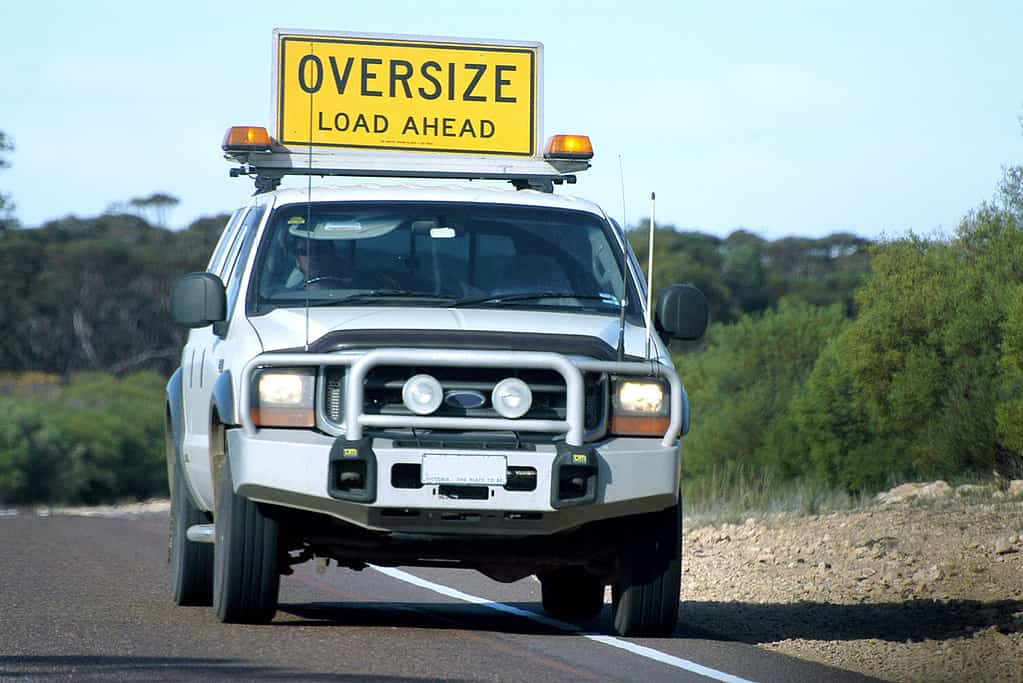
Most pilot car policies are built from several coverages that address the specific risks of escort work:
Primary Liability
Primary liability covers bodily injury and property damage to third parties — it’s required by law and applies to others, not to you or your own vehicle. If you cause an accident that injures another driver, this pays their medical costs, not yours. Many pilot car drivers add medical payments coverage to protect themselves and their passengers.
Hired and Non-Owned Auto
If you drive a pilot car you don’t own but use for business, hired and non-owned auto coverage provides the liability protection a personal policy won’t.
Professional Liability (Errors & Omissions)
Escort work involves judgment calls — flagging, routing, and pole-height clearance — and a mistake can lead to a claim even when your vehicle never touches anything. Professional liability (E&O) protects you against lawsuits arising from your work outside the vehicle.
Uninsured / Underinsured Motorist
If an uninsured or underinsured driver hits you, this covers repairs, damage, and medical care instead of leaving you to absorb the cost.
Inland Marine (Equipment Coverage)
Escort vehicles carry a lot of extra equipment — flags, signage, lights, high poles. Inland marine coverage protects that gear if it’s damaged, and can cover property in your care during transport.
Workers’ Compensation
If you have employees and one is injured on the job, workers’ compensation covers their medical costs, lost wages, and disability benefits. Most states require it once you have employees — check your state’s rules, and consider carrying it even where it’s optional to protect against employee lawsuits.
How Much Does Pilot Car Insurance Cost?
Pilot car insurance cost depends on:
- Your driving history
- Your location and the states you operate in
- Your policy limits
- Your vehicle’s age, make, and model
- The coverages you choose
Policies generally run $400 to $1,000+ per month, depending on those factors and how much coverage you carry.
Editor: confirm this monthly range still reflects current quotes before publishing.
You can keep costs down by comparing quotes from multiple carriers, and by weighing a few trade-offs against your risk tolerance: a higher deductible, lower limits where a state allows it, or paying six or twelve months upfront. A documented safety program can also help lower premiums, since insurers price on risk. Just be careful not to drop below the limits your states or load carriers require to save money — an uncovered claim costs far more than the premium.
When comparing providers, ask which states the coverage is valid in, what discounts are available, and whether you’ll work with a dedicated agent.
Frequently Asked Questions
What is pilot car insurance? Pilot car insurance is a commercial policy for escort vehicle drivers who guide oversized loads, aircraft, or traffic through work zones. It typically combines primary liability, hired and non-owned auto, professional liability, uninsured motorist, and equipment (inland marine) coverage.
Do I need commercial insurance if I use my personal car as a pilot car? Yes. Personal auto insurance excludes business use, so a claim during escort work could be denied. You need a commercial policy even when driving your own vehicle.
How much does pilot car insurance cost? Most pilot car policies run about $400 to $1,000+ per month, depending on your driving history, location, coverage limits, and vehicle. Comparing multiple carriers is the best way to find your actual rate.
Which states require pilot car certification? Requirements vary by state. Some require escort drivers to complete a certification program and carry escort-specific coverage — Colorado, for example, requires certification, a $1,000,000 combined single limit, and a policy that explicitly covers pilot/escort operations. Always confirm the current rules with the DOT of each state you operate in. See our state-by-state breakdown above.
What is the minimum liability coverage for a pilot car? Many states and load carriers expect a $1,000,000 combined single limit, though the exact minimum varies by state. Check the requirements for each state where you work.
Does pilot car insurance cover my equipment like flags, lights, and poles? Yes — the inland marine portion of a pilot car policy covers escort equipment such as flags, signage, and high poles if they’re damaged.
Get Your Free Quote Started